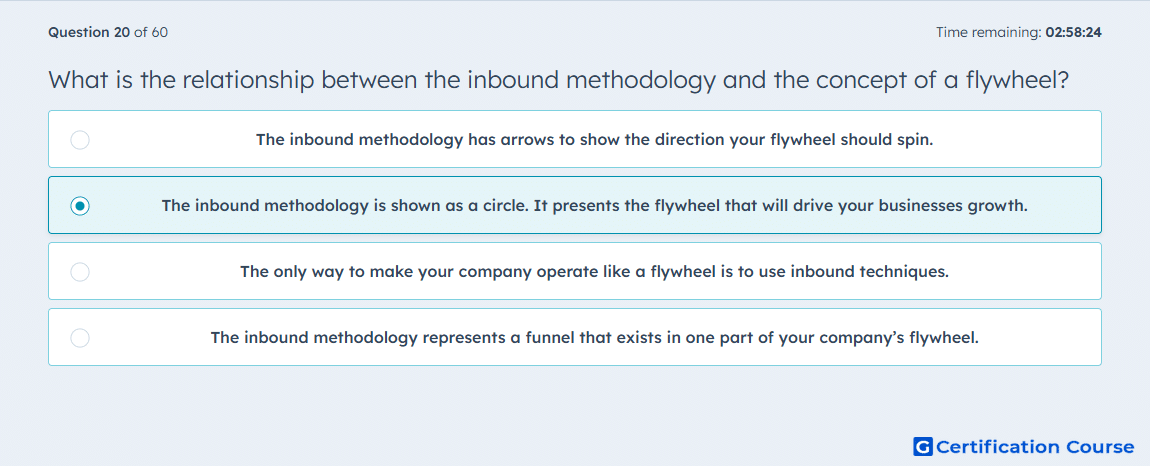
Question: What is the relationship between the inbound methodology and the concept of a flywheel?
- The inbound methodology has arrows to show the direction your flywheel should spin.
- The inbound methodology is shown as a circle. It presents the flywheel that will drive your businesses growth.
- The only way to make your company operate like a flywheel is to use inbound techniques.
- The inbound methodology represents a funnel that exists in one part of your company’s flywheel.
Explanation
HubSpot uses the inbound methodology to organize how teams create value across the flywheel. The stages Attract, Engage, and Delight work together to generate momentum through the customer experience. This model shows growth as a continuous system rather than a one-time linear handoff. The flywheel accelerates when teams add force and reduce friction at each stage.
Why the other options are incorrect
Arrows focuses on visual direction, not the strategic relationship between the inbound methodology and the flywheel.
Only inbound techniques is too absolute because the flywheel is a business model, not a single required tactic.
Funnel in one part is incorrect because the inbound methodology is represented through the broader flywheel model.
Source for verification
https://www.hubspot.com/flywheel
https://academy.hubspot.com/lessons/inbound-fundamentals
The answer(s) to the question is highlighted in the BOLD text above. You can also find more questions and answers related to the exams on the "HubSpot Inbound Certification" page.
The options for this question has changed. Kindly Check
Updated.