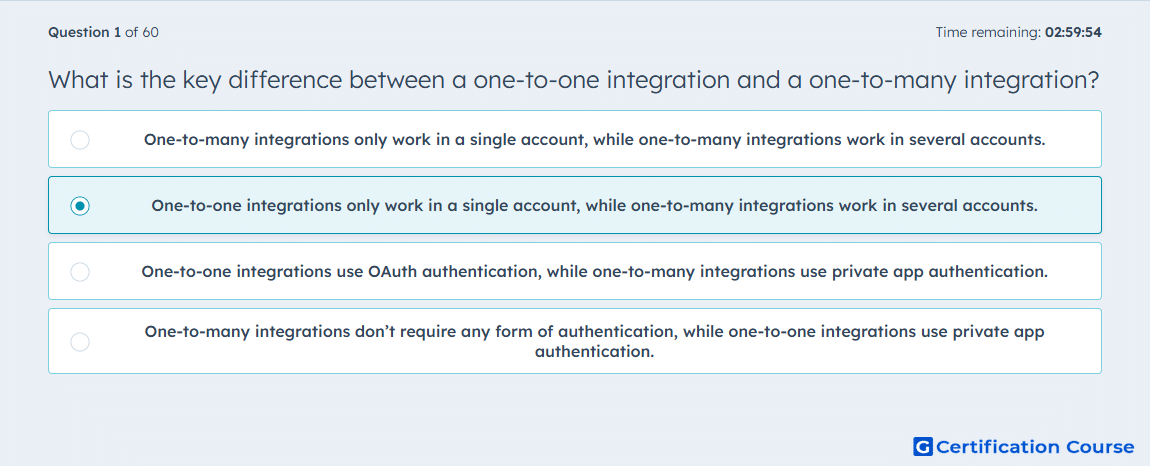
Question: What is the key difference between a one-to-one integration and a one-to-many integration?
- One-to-many integrations only work in a single account, while one-to-many integrations work in several accounts.
- One-to-one integrations only work in a single account, while one-to-many integrations work in several accounts.
- One-to-one integrations use OAuth authentication, while one-to-many integrations use private app authentication.
- One-to-many integrations don’t require any form of authentication, while one-to-one integrations use private app authentication.
Explanation
The difference is based on account scope, not authentication type. In an Amazon Ads environment, access is tied to advertiser and account structures that control where a tool or integration can operate. A limited setup supports one connected account context, while a scalable setup supports multiple account contexts for agencies, partners, or tool providers. This distinction matters when managing several advertisers through Amazon DSP or broader Amazon Ads workflows. Authentication methods do not define whether an integration is one-to-one or one-to-many.
Why the other options are incorrect
One-to-many integrations This reverses the account-scope distinction and incorrectly describes one-to-many as limited to one account.
OAuth authentication Authentication method is separate from whether the integration supports one account or multiple accounts.
No authentication Amazon Ads integrations still require authorized access, so lack of authentication is not a valid integration model.
Source for verification
Amazon DSP: advertising.amazon.com
Amazon Ads advertiser account: advertising.amazon.com
The answer(s) to the question is highlighted in the BOLD text above. You can also find more questions and answers related to the exams on the "Integrating With HubSpot I: Foundations" page.