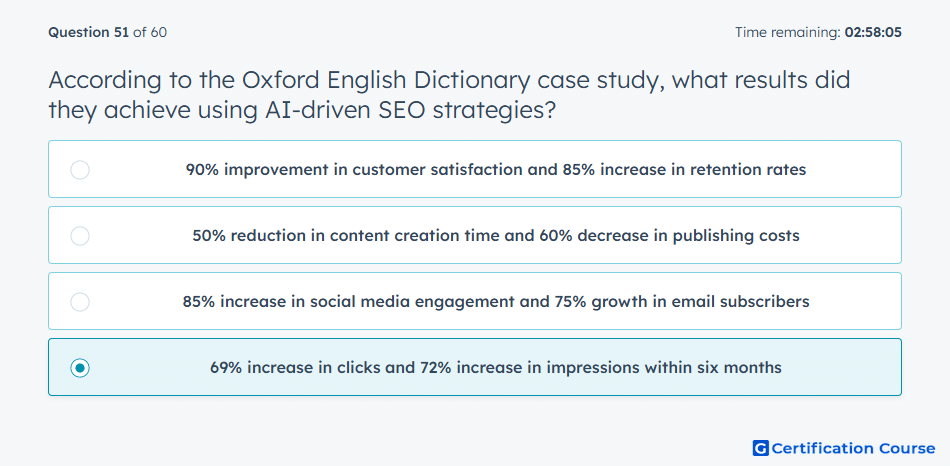
Question: According to the Oxford English Dictionary case study, what results did they achieve using AI-driven SEO strategies?
- 90% improvement in customer satisfaction and 85% increase in retention rates
- 50% reduction in content creation time and 60% decrease in publishing costs
- 85% increase in social media engagement and 75% growth in email subscribers
- 69% increase in clicks and 72% increase in impressions within six months
Explanation
The reported outcome is tied to SEO performance, not customer service, content production costs, or social channel growth. Clicks indicate that more users selected the search result or listing. Impressions indicate that the content appeared more often in search results. Together, those metrics show improved search visibility and stronger user engagement from organic discovery. This aligns with HubSpot’s focus on using performance data to improve content and search strategy.
Why the other options are incorrect
Customer satisfaction and retention are relationship metrics, not the SEO performance results described in the case study.
Content creation time and publishing costs measure operational efficiency, not search visibility.
Social media engagement and email subscribers belong to social and email performance, not organic search performance.
Source for verification
https://knowledge.hubspot.com/seo/view-seo-recommendations-in-hubspot
The answer(s) to the question is highlighted in the BOLD text above. You can also find more questions and answers related to the exams on the "HubSpot Digital Marketing Course" page.