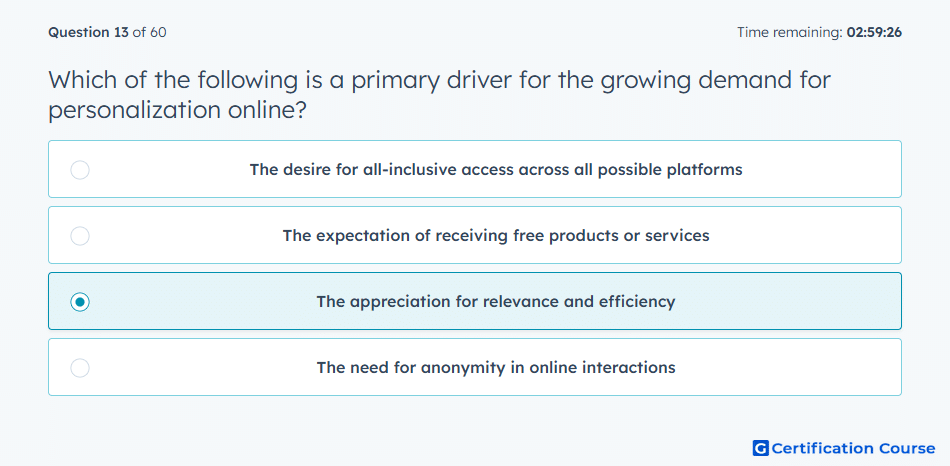
Question: Which of the following is a primary driver for the growing demand for personalization online?
- The desire for all-inclusive access across all possible platforms
- The expectation of receiving free products or services
- The appreciation for relevance and efficiency
- The need for anonymity in online interactions
Explanation
Personalization improves UX by making content feel more relevant to the visitor’s needs, context, or relationship with the brand. HubSpot supports this through personalization tokens, which use CRM property values to tailor content. HubSpot also supports smart content, which can show different content based on visitor or contact criteria. Relevant experiences reduce friction because people can find useful information faster. This supports more efficient interactions across digital touchpoints.
Why the other options are incorrect
All-inclusive access focuses on platform availability, not personalized relevance.
Free products describe a pricing expectation, not the reason personalization is valued.
Anonymity conflicts with personalization because tailored experiences depend on known or inferred context.
Source for verification
https://knowledge.hubspot.com/marketing-email/use-personalization-tokens
https://knowledge.hubspot.com/website-and-landing-pages/create-and-manage-smart-content-rules
The answer(s) to the question is highlighted in the BOLD text above. You can also find more questions and answers related to the exams on the "HubSpot Digital Marketing Course" page.