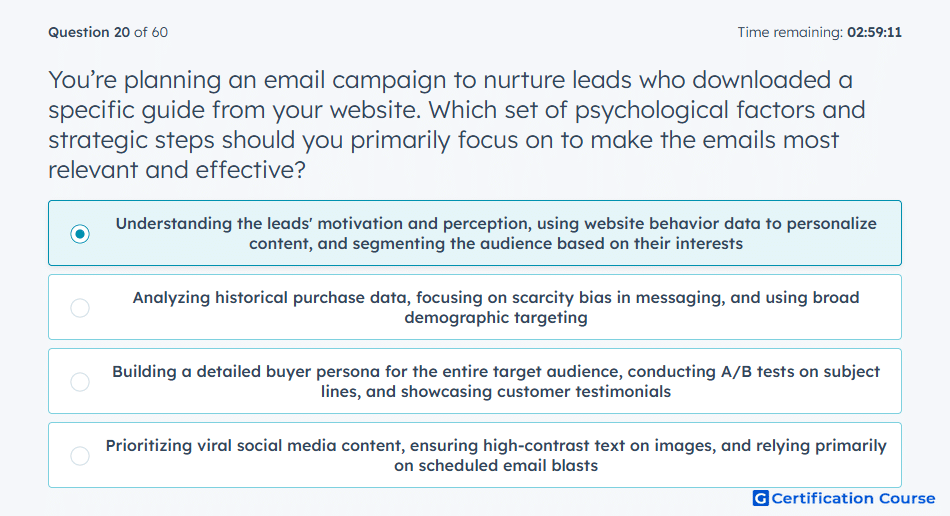
Question: You’re planning an email campaign to nurture leads who downloaded a specific guide from your website. Which set of psychological factors and strategic steps should you primarily focus on to make the emails most relevant and effective?
- Understanding the leads' motivation and perception, using website behavior data to personalize content, and segmenting the audience based on their interests
- Analyzing historical purchase data, focusing on scarcity bias in messaging, and using broad demographic targeting
- Building a detailed buyer persona for the entire target audience, conducting A/B tests on subject lines, and showcasing customer testimonials
- Prioritizing viral social media content, ensuring high-contrast text on images, and relying primarily on scheduled email blasts
Explanation
Effective lead nurturing depends on using segmentation and behavioral context to make follow-up content relevant. HubSpot segments can group contacts based on behavior and property values, which supports more targeted marketing email sends. Personalization tokens can then tailor email content using information stored in the CRM. This approach connects user intent, prior engagement, and email messaging into a more useful nurturing experience.
Why the other options are incorrect
Historical purchase data is too narrow for nurturing leads who have shown guide-based interest.
Buyer persona and A/B tests can support optimization, but they do not prioritize behavioral relevance and segmentation.
Viral social content shifts focus away from targeted email nurturing and contact-specific relevance.
Source for verification
https://knowledge.hubspot.com/segments/create-active-or-static-lists
https://knowledge.hubspot.com/marketing-email/use-personalization-tokens
The answer(s) to the question is highlighted in the BOLD text above. You can also find more questions and answers related to the exams on the "HubSpot Digital Marketing Course" page.