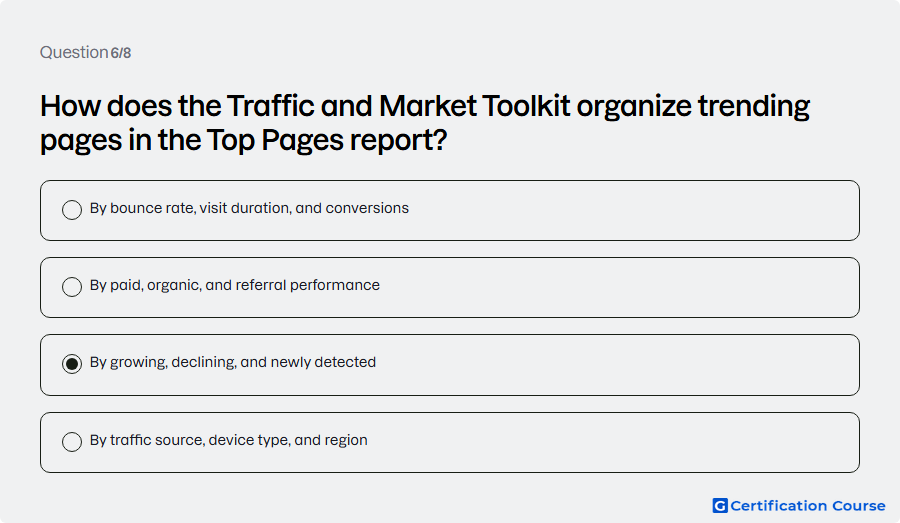
Question: How does the Traffic and Market Toolkit organize trending pages in the Top Pages report?
- By bounce rate, visit duration, and conversions
- By paid, organic, and referral performance
- By growing, declining, and newly detected
- By traffic source, device type, and region
Explanation
The Top Pages report features a dedicated trend-tracking mechanism to help marketers quickly spot shifts in content visibility. The platform automatically organizes this information to isolate URLs that are actively altering the domain's overall baseline. This sorting function instantly flags assets experiencing significant positive or negative trajectory shifts, alongside recently indexed content. Utilizing these predefined trend filters allows users to prioritize their competitive analysis on the most volatile or impactful pieces of content.
Why the other options are incorrect
By bounce rate, visit duration, and conversions represents behavioral and transactional metrics rather than the trend-based categories used to organize this specific report.
By paid, organic, and referral performance refers to traffic channel distribution rather than the URL momentum classifications within the trending pages view.
By traffic source, device type, and region describes general dimension filters available across the platform rather than the specific trending page categories.
The answer(s) to the question is highlighted in the BOLD text above. You can also find more questions and answers related to the exams on the "SEMrush Traffic & Market Toolkit Crash Course" page.