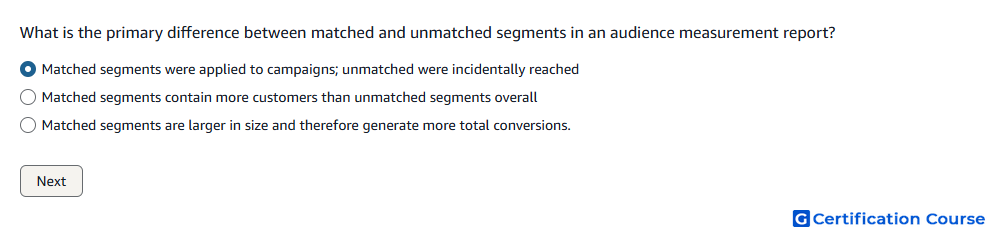
What is the primary difference between matched and unmatched segments in an audience measurement report?
Question: What is the primary difference between matched and unmatched segments in an audience measurement report? Matched segments were applied
Question: What is the primary difference between matched and unmatched segments in an audience measurement report? Matched segments were applied

Question: An experienced analyst wants to build an advanced query that doesn’t fit any existing template. They’re comfortable writing SQL
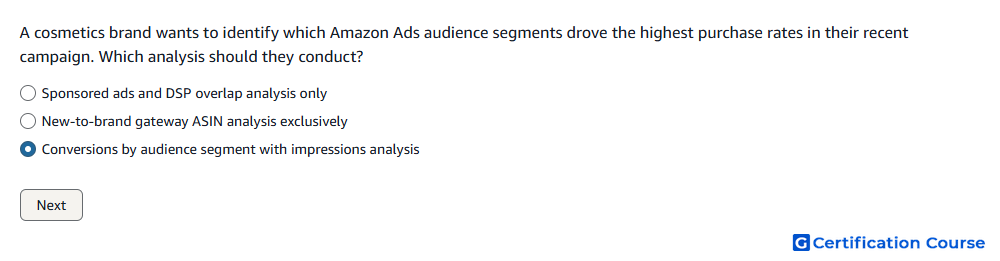
Question: A cosmetics brand wants to identify which Amazon Ads audience segments drove the highest purchase rates in their recent
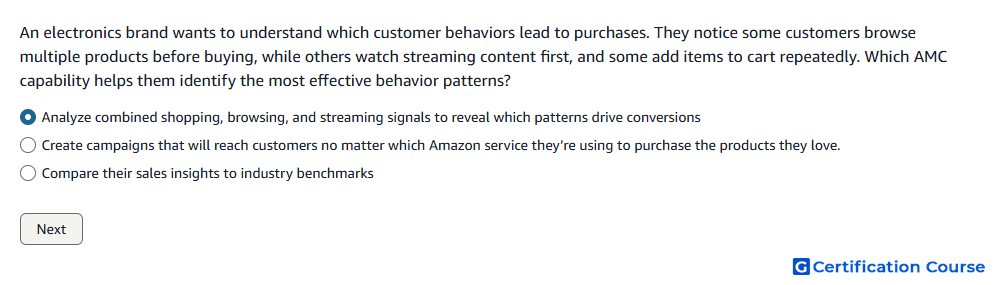
Question: An electronics brand wants to understand which customer behaviors lead to purchases. They notice some customers browse multiple products
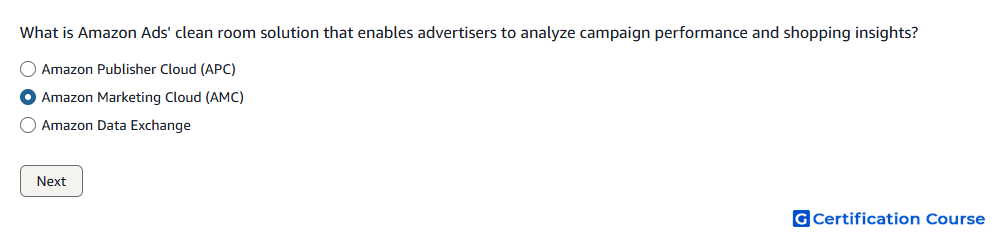
Question: What is Amazon Ads’ clean room solution that enables advertisers to analyze campaign performance and shopping insights? Amazon Publisher
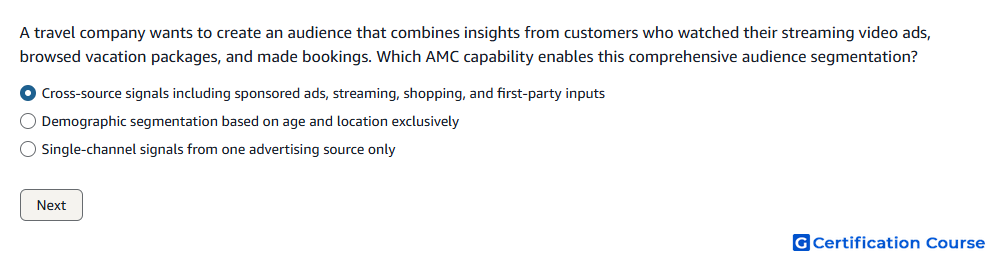
Question: A travel company wants to create an audience that combines insights from customers who watched their streaming video ads,
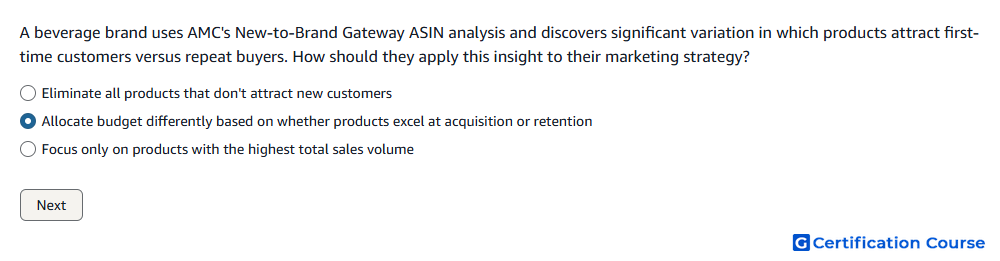
Question: A beverage brand uses AMC’s New-to-Brand Gateway ASIN analysis and discovers significant variation in which products attract first-time customers
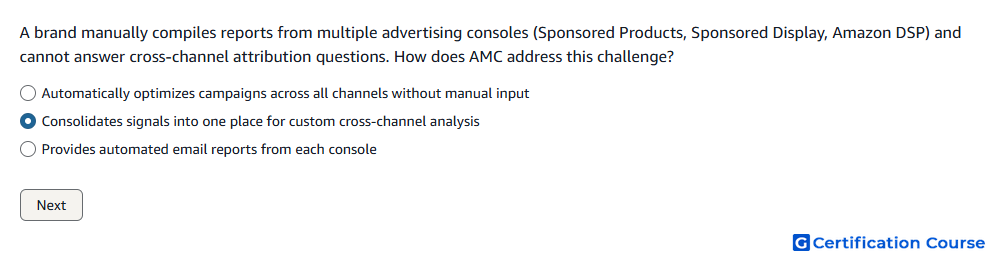
Question: A brand manually compiles reports from multiple advertising consoles (Sponsored Products, Sponsored Display, Amazon DSP) and cannot answer cross-channel

Question: Which of these elements are driving the need for clean room use in advertising? An inability to collaborate on
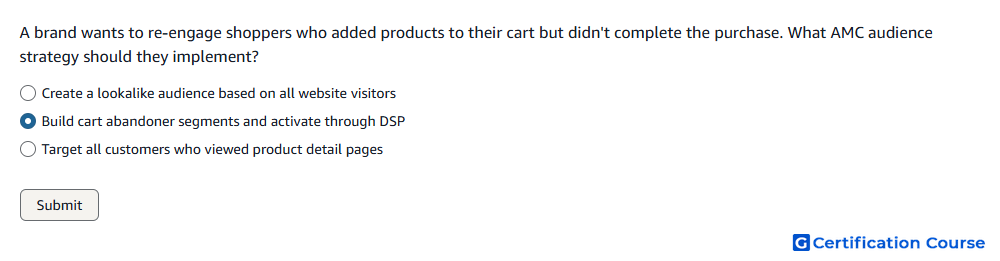
Question: A brand wants to re-engage shoppers who added products to their cart but didn’t complete the purchase. What AMC
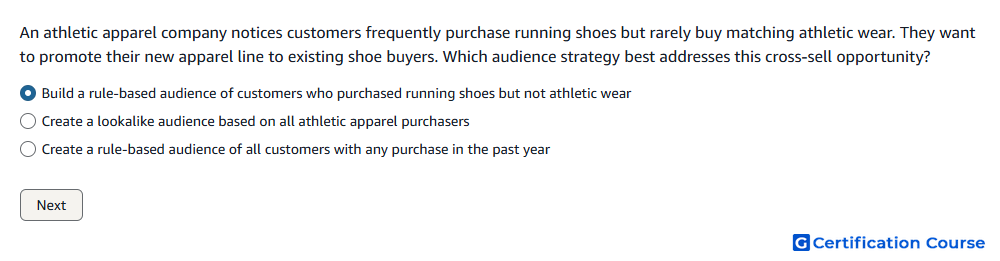
Question: An athletic apparel company notices customers frequently purchase running shoes but rarely buy matching athletic wear. They want to
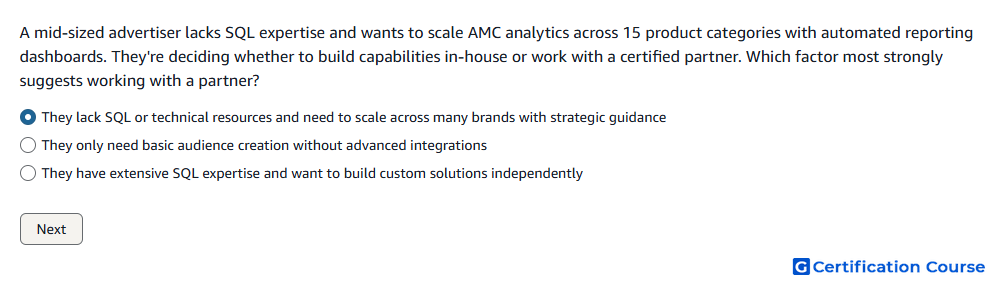
Question: A mid-sized advertiser lacks SQL expertise and wants to scale AMC analytics across 15 product categories with automated reporting