
Which of these queries will only include purchase records from the underlying table?
Question: Which of these queries will only include purchase records from the underlying table? SELECT campaign, COUNT(DISTINCT user_id) AS purchasers,
Question: Which of these queries will only include purchase records from the underlying table? SELECT campaign, COUNT(DISTINCT user_id) AS purchasers,
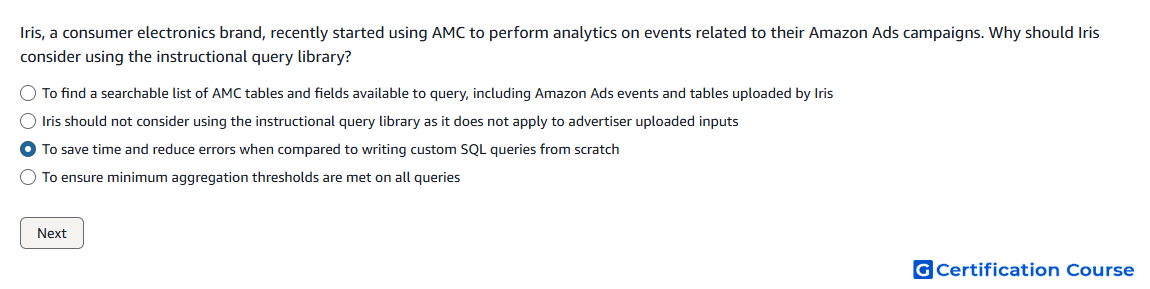
Question: Iris, a consumer electronics brand, recently started using AMC to perform analytics on events related to their Amazon Ads

Question: When determining total impressions served over a given date range, you can use dsp_impressions or dsp_views. True False The

Question: Why are developer resources required for creating first-party tables in AMC? Because first-party table creation is an API-only feature

Question: Cost and fee fields are always reported in microcents. False True The answer(s) to the question is highlighted in
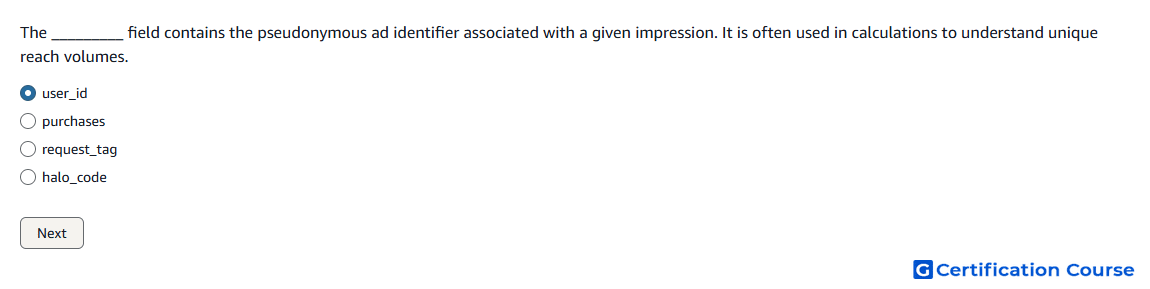
Question: The _________ field contains the pseudonymous ad identifier associated with a given impression. It is often used in calculations
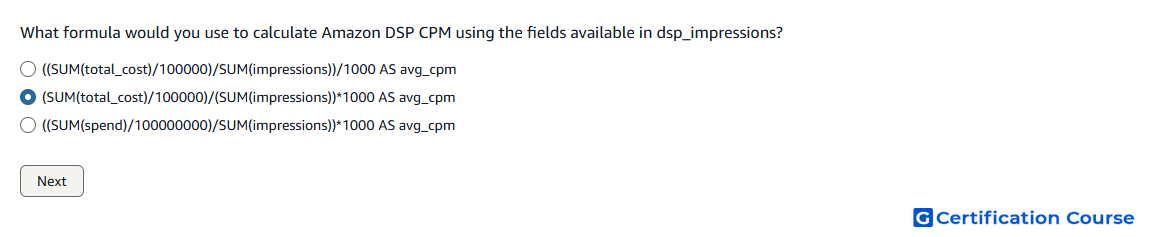
Question: What formula would you use to calculate Amazon DSP CPM using the fields available in dsp_impressions? (SUM(total_cost)/100000)/(SUM(impressions))*1000 AS avg_cpm

Question: You can use a _________ filter to limit your query results based on one or more conditions. FROM WHERE
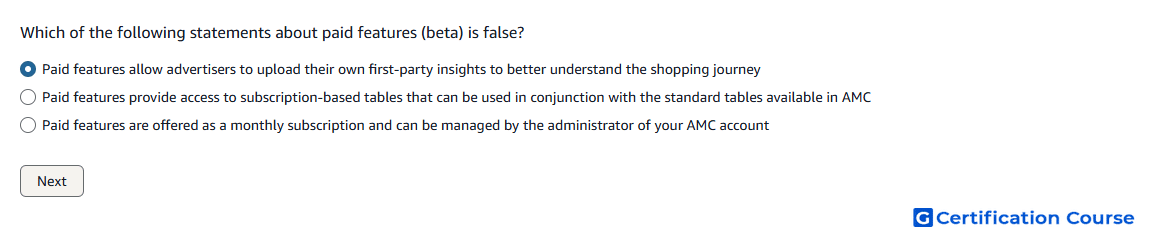
Question: Which of the following statements about paid features (beta) is false? Paid features are offered as a monthly subscription
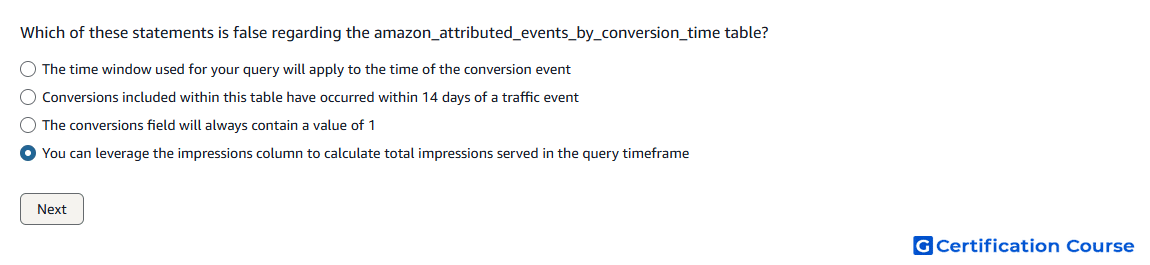
Question: Which of these statements is false regarding the amazon_attributed_events_by_conversion_time table? The time window used for your query will apply
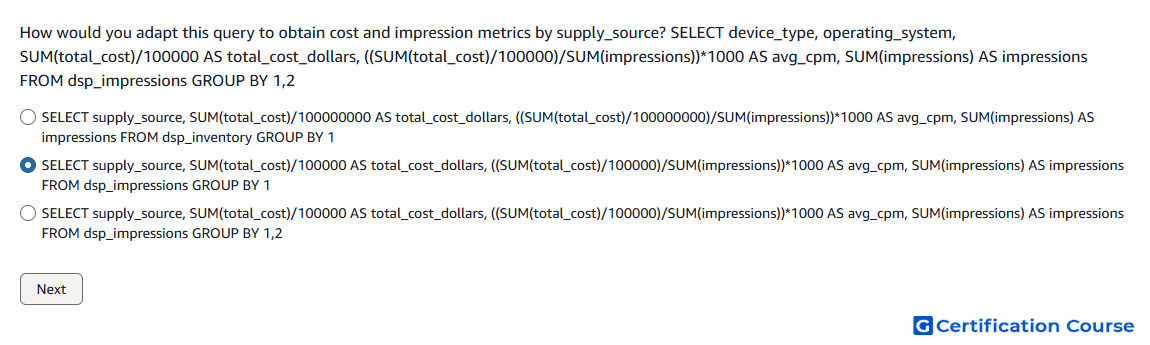
Question: How would you adapt this query to obtain cost and impression metrics by supply_source? SELECT device_type, operating_system, SUM(total_cost)/100000 AS
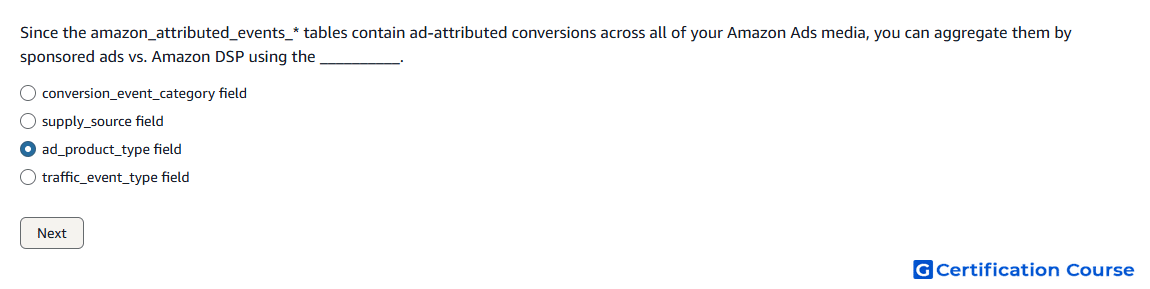
Question: Since the amazon_attributed_events_* tables contain ad-attributed conversions across all of your Amazon Ads media, you can aggregate them by