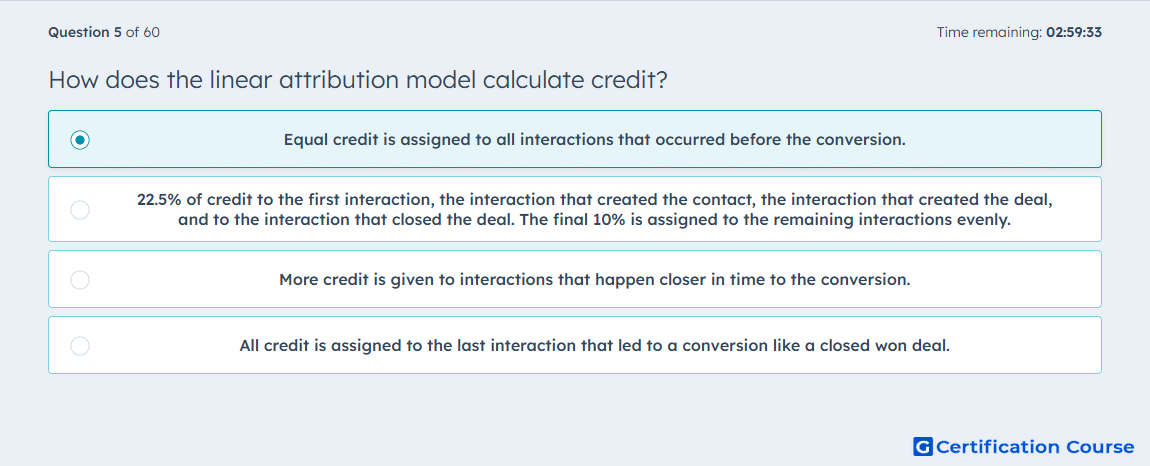
Question: How does the linear attribution model calculate credit?
- Equal credit is assigned to all interactions that occurred before the conversion.
- 22.5% of credit to the first interaction, the interaction that created the contact, the interaction that created the deal, and to the interaction that closed the deal. The final 10% is assigned to the remaining interactions evenly.
- More credit is given to interactions that happen closer in time to the conversion.
- All credit is assigned to the last interaction that led to a conversion like a closed won deal.
Explanation
The linear attribution model treats each recorded touchpoint in the conversion path as contributing to the outcome. This model is useful when multiple interactions helped move a contact toward conversion. It avoids overvaluing only the first, last, or closest interaction. In HubSpot attribution reporting, it provides a balanced view of how marketing assets and channels work together across the journey.
Why the other options are incorrect
Full path attribution assigns major credit to specific milestone interactions across the revenue journey.
Time decay attribution gives more weight to interactions that occur closer to the conversion.
Last interaction attribution assigns credit only to the final touchpoint before conversion.
Source for verification
https://knowledge.hubspot.com/reports/understand-attribution-reporting
The answer(s) to the question is highlighted in the BOLD text above. You can also find more questions and answers related to the exams on the "HubSpot Inbound Marketing Certification" page.