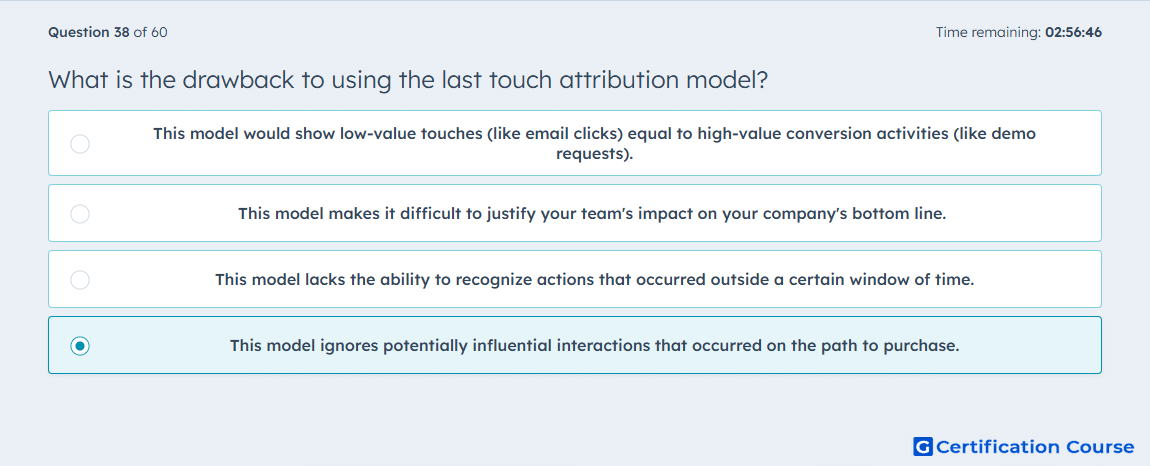
Question: What is the drawback to using the last touch attribution model?
- This model would show low-value touches (like email clicks) equal to high-value conversion activities (like demo requests).
- This model makes it difficult to justify your team's impact on your company's bottom line.
- This model lacks the ability to recognize actions that occurred outside a certain window of time.
- This model ignores potentially influential interactions that occurred on the path to purchase.
Explanation
The last touch attribution model assigns all conversion credit to the final interaction before conversion. This creates a narrow view of performance because earlier marketing touchpoints receive no credit. In inbound marketing, multiple assets and channels may help build awareness, trust, and intent before the final action. HubSpot attribution reporting uses models like linear attribution and full path attribution when a broader view of the customer journey is needed.
Why the other options are incorrect
Equal weighting describes a drawback of the linear attribution model, not last touch.
Bottom-line impact is not the main limitation because last touch can still connect one interaction to revenue.
Time window limits relate to reporting configuration and attribution windows, not the core weakness of last touch.
Source for verification
https://knowledge.hubspot.com/reports/understand-attribution-reporting
The answer(s) to the question is highlighted in the BOLD text above. You can also find more questions and answers related to the exams on the "HubSpot Inbound Marketing Certification" page.