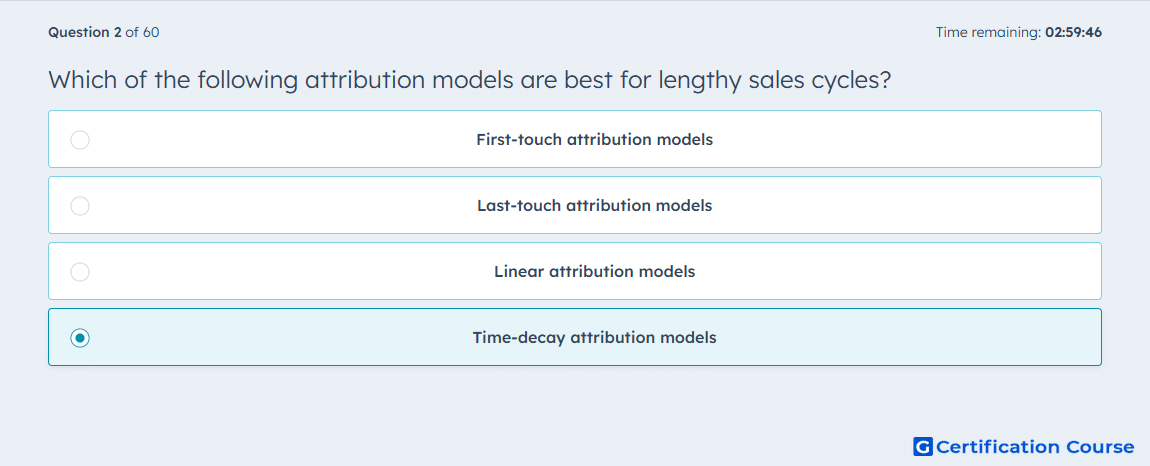
Question: Which of the following attribution models are best for lengthy sales cycles?
- First-touch attribution models
- Last-touch attribution models
- Linear attribution models
- Time-decay attribution models
Explanation
Time-decay attribution models give increasing credit to interactions that occur closer to the deal close date, which aligns with lengthy sales cycles where multiple touchpoints influence outcomes over time. This model accurately reflects the impact of recent engagement without ignoring earlier interactions. It allows measurement of the effectiveness of campaigns that nurture leads gradually. HubSpot uses this model to track revenue attribution for multi-touch, long-cycle deals. It ensures that both early and late touchpoints contribute proportionally to conversion analysis.
Why the other options are incorrect
First-touch attribution models overemphasize the initial interaction, ignoring later touches that influence lengthy sales cycles.
Last-touch attribution models only credit the final interaction, missing the contribution of earlier nurturing steps.
Linear attribution models assign equal credit to all interactions, which can underrepresent the influence of later touchpoints in long sales cycles.
Source for verification
HubSpot Attribution Reports
The answer(s) to the question is highlighted in the BOLD text above. You can also find more questions and answers related to the exams on the "HubSpot Reporting" page.