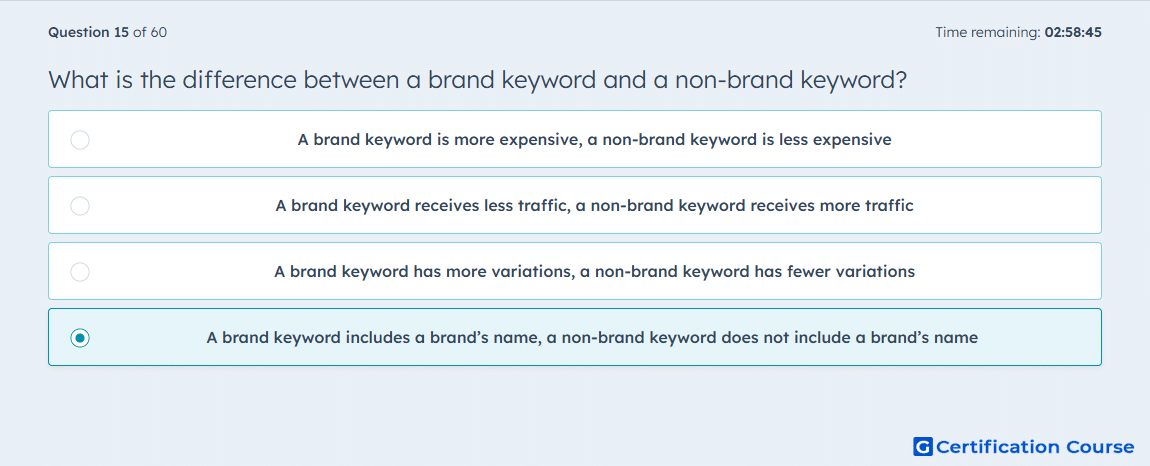
Question: What is the difference between a brand keyword and a non-brand keyword?
- A brand keyword is more expensive, a non-brand keyword is less expensive
- A brand keyword receives less traffic, a non-brand keyword receives more traffic
- A brand keyword has more variations, a non-brand keyword has fewer variations
- A brand keyword includes a brand’s name, a non-brand keyword does not include a brand’s name
Explanation
HubSpot defines a brand keyword as a word or phrase that includes a brand’s name or a variation of it. A non-brand keyword refers to a relevant search term that does not contain the brand name. This distinction matters in paid search because brand terms capture existing awareness, while non-brand terms help reach people who are still discovering possible solutions. The difference is based on whether the keyword contains the brand name, not on price, traffic level, or variation count. HubSpot Blog+1
Why the other options are incorrect
A) Cost is not the defining difference because HubSpot classifies these keywords by naming structure, not by whether one is more expensive. HubSpot Blog+1
B) Traffic volume is not the rule that separates the two categories because either type can have higher or lower search demand. HubSpot Blog+1
C) The number of variations does not define the category because HubSpot distinguishes them by the presence or absence of the brand name. HubSpot Blog+1
Source for verification
https://blog.hubspot.com/marketing/keywords
https://blog.hubspot.com/marketing/online-advertising
The answer(s) to the question is highlighted in the BOLD text above. You can also find more questions and answers related to the exams on the "HubSpot Digital Advertising" page.