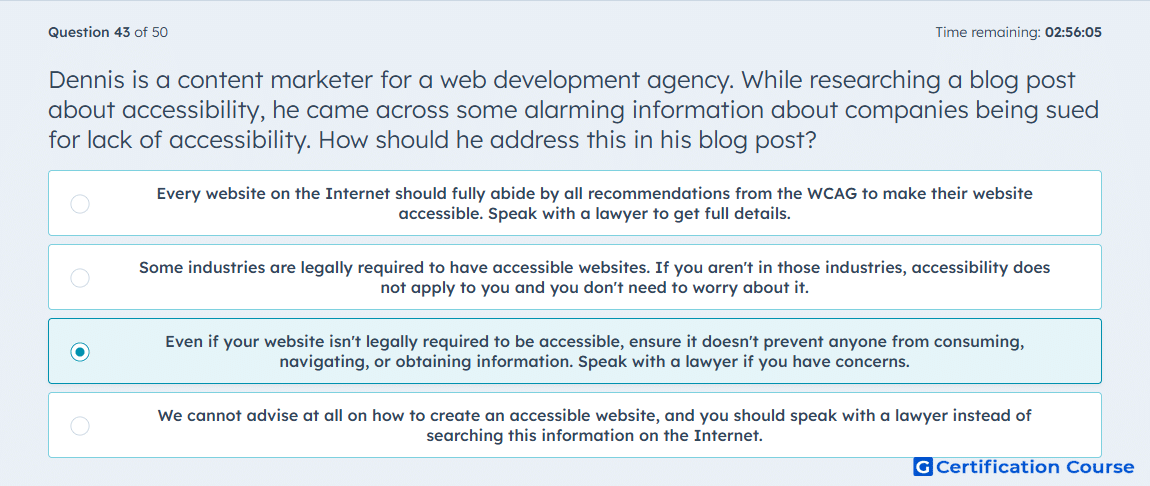
Question: Dennis is a content marketer for a web development agency. While researching a blog post about accessibility, he came across some alarming information about companies being sued for lack of accessibility. How should he address this in his blog post?
- Every website on the Internet should fully abide by all recommendations from the WCAG to make their website accessible. Speak with a lawyer to get full details.
- Some industries are legally required to have accessible websites. If you aren't in those industries, accessibility does not apply to you and you don't need to worry about it.
- Even if your website isn't legally required to be accessible, ensure it doesn't prevent anyone from consuming, navigating, or obtaining information. Speak with a lawyer if you have concerns.
- We cannot advise at all on how to create an accessible website, and you should speak with a lawyer instead of searching this information on the Internet.
Explanation
Accessible content supports HubSpot’s inbound methodology because helpful experiences should allow people to consume, navigate, and obtain information without unnecessary barriers. The correct approach balances accessibility as a user experience responsibility with the need for legal guidance when compliance concerns exist. Accessibility should not be dismissed just because legal requirements may vary by industry or location. A practical content recommendation should encourage inclusive website improvements without presenting legal advice as certainty.
Why the other options are incorrect
WCAG compliance for every website is incorrect because it overstates the legal requirement and turns the content into legal advice.
Accessibility does not apply is incorrect because accessibility is still important for user experience even when a specific legal requirement is unclear.
No accessibility guidance is incorrect because marketers can provide general accessibility best practices while directing legal concerns to a lawyer.
Source for verification
https://knowledge.hubspot.com/website-pages/manage-page-settings
https://knowledge.hubspot.com/website-pages/create-and-customize-pages-BETA
The answer(s) to the question is highlighted in the BOLD text above. You can also find more questions and answers related to the exams on the "HubSpot Inbound Marketing Optimization" page.