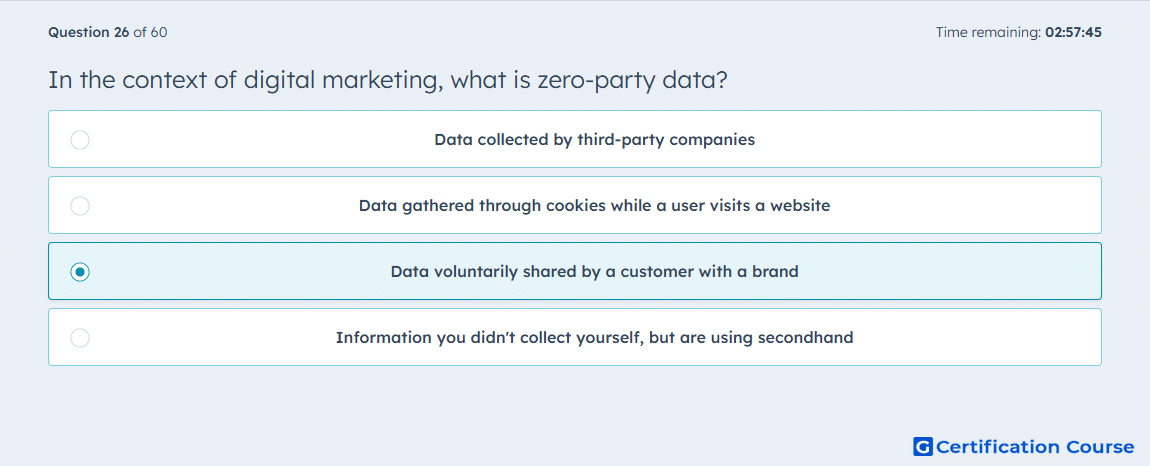
Question: In the context of digital marketing, what is zero-party data?
- Data collected by third-party companies
- Data gathered through cookies while a user visits a website
- Data voluntarily shared by a customer with a brand
- Information you didn't collect yourself, but are using secondhand
Explanation
Zero-party data comes directly from customers when they intentionally share preferences, interests, or needs with a brand. This data can come from surveys, profile settings, quizzes, preference centers, or direct customer interactions. In Amazon DSP, privacy-aware planning increasingly depends on consented signals, first-party relationships, and signal-based marketing. Zero-party data can improve relevance because it reflects what customers choose to disclose rather than inferred behavior alone.
Why the other options are incorrect
Third-party companies is incorrect because that describes data collected outside the direct brand-customer relationship.
Cookies is incorrect because cookie-based data is collected through site behavior, not voluntarily stated customer preferences.
Secondhand information is incorrect because secondhand data describes data obtained from another source, not directly provided by the customer.
Source for verification
https://advertising.amazon.com/library/guides/signal-based-marketing
https://advertising.amazon.com/API/docs/en-us/ads-data-manager
The answer(s) to the question is highlighted in the BOLD text above. You can also find more questions and answers related to the exams on the "Social Media Marketing Certification II" page.