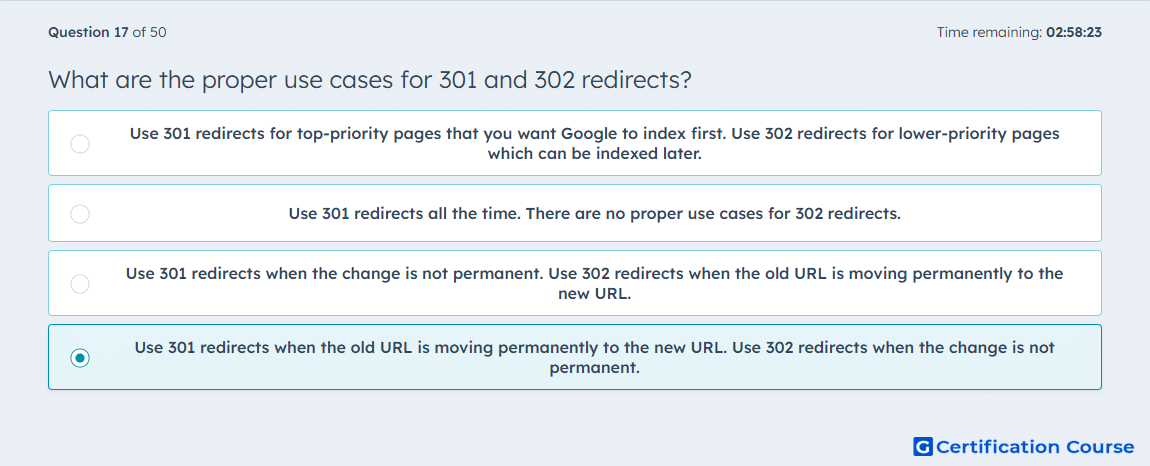
Question: What are the proper use cases for 301 and 302 redirects?
- Use 301 redirects for top-priority pages that you want Google to index first. Use 302 redirects for lower-priority pages which can be indexed later.
- Use 301 redirects all the time. There are no proper use cases for 302 redirects.
- Use 301 redirects when the change is not permanent. Use 302 redirects when the old URL is moving permanently to the new URL.
- Use 301 redirects when the old URL is moving permanently to the new URL. Use 302 redirects when the change is not permanent.
Explanation
A 301 redirect signals to search engines that a URL has moved permanently, transferring most SEO equity to the new URL. A 302 redirect indicates a temporary change, preserving the original URL’s indexing and ranking. Correctly using these redirects ensures link authority is maintained and prevents duplicate content issues. This distinction helps search engines understand which pages to index long-term.
Why the other options are incorrect
A) Redirect priority does not determine 301 vs. 302 usage.
B) 302 redirects have valid use cases for temporary URL changes.
C) The redirect types are reversed, which is incorrect.
Source for verification
HubSpot Academy: SEO Redirects
The answer(s) to the question is highlighted in the BOLD text above. You can also find more questions and answers related to the exams on the "HubSpot SEO II" page.