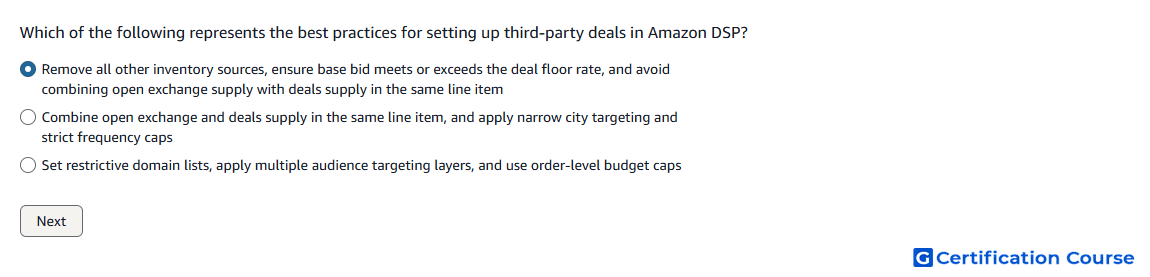
Question: Which of the following represents the best practices for setting up third-party deals in Amazon DSP?
- Remove all other inventory sources, ensure base bid meets or exceeds the deal floor rate, and avoid combining open exchange supply with deals supply in the same line item
- Combine open exchange and deals supply in the same line item, and apply narrow city targeting and strict frequency caps
- Set restrictive domain lists, apply multiple audience targeting layers, and use order-level budget caps
Explanation
Third-party deals should be isolated from other inventory sources so delivery and troubleshooting remain clear in Amazon DSP. The base bid should meet or exceed the deal floor so the line item can compete for eligible deal impressions. Mixing open exchange supply with deal supply in the same line item can make performance and delivery harder to evaluate. This setup supports cleaner deal activation and reduces avoidable delivery constraints.
Why the other options are incorrect
Open exchange and deals supply is incorrect because combining them in one line item can reduce control and make deal performance harder to isolate.
Restrictive domain lists is incorrect because excessive targeting restrictions can limit delivery and reduce available deal inventory.
Source for verification
https://advertising.amazon.com/help/GNDZUAMBR43R6QA7
https://advertising.amazon.com/help/GJVHGUJXDUKTGHG4
The answer(s) to the question is highlighted in the BOLD text above. You can also find more questions and answers related to the exams on the "Amazon DSP Advanced" page.