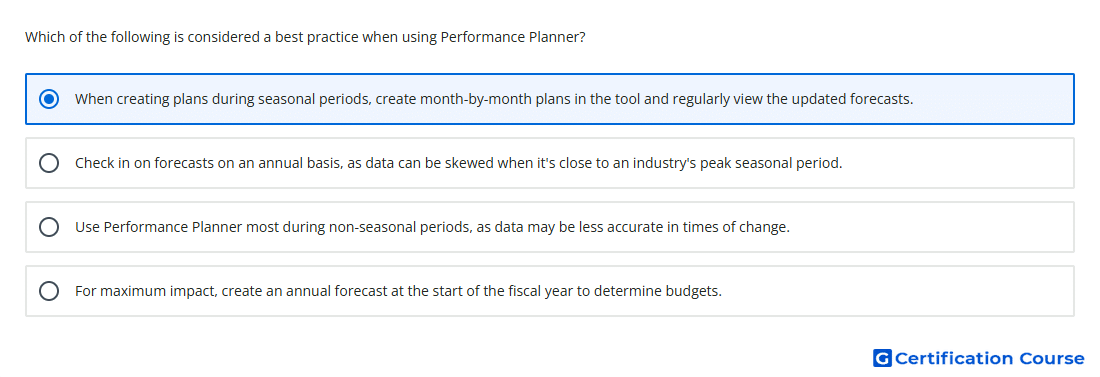
Question: Which of the following is considered a best practice when using Performance Planner?
- When creating plans during seasonal periods, create month-by-month plans in the tool and regularly view the updated forecasts.
- Check in on forecasts on an annual basis, as data can be skewed when it’s close to an industry’s peak seasonal period.
- Use Performance Planner most during non-seasonal periods, as data may be less accurate in times of change.
- For maximum impact, create an annual forecast at the start of the fiscal year to determine budgets.
Explanation
Performance Planner forecasts should be reviewed regularly because projected performance can change as auction conditions, budgets, and seasonality shift. Month-by-month planning helps keep budget decisions aligned with shorter-term demand changes. During seasonal periods, updated forecasts can reveal new opportunities or constraints before performance is affected. This makes budget planning more responsive inside Google Ads.
Why the other options are incorrect
Annual check-ins are too infrequent because forecasts can change throughout the year.
Non-seasonal use is incorrect because Performance Planner is useful for planning seasonal demand changes.
Annual forecast is too static because budget plans should be revisited as conditions change.
Source for verification
https://support.google.com/google-ads/answer/9230124
The answer(s) to the question is highlighted in the BOLD text above. You can also find more questions and answers related to the exams on the "Google Ads AI-Powered Performance Ads Assessment" page.