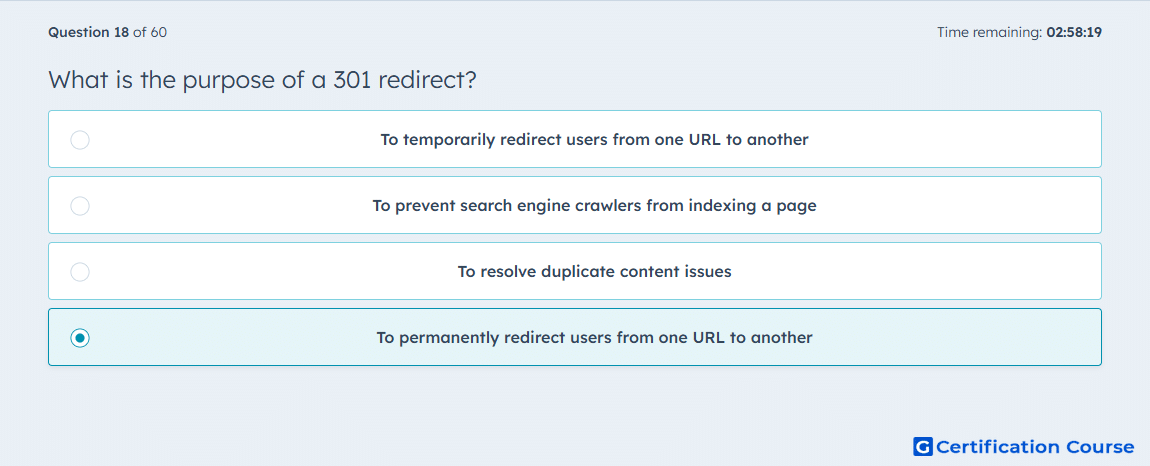
Question: What is the purpose of a 301 redirect?
- To temporarily redirect users from one URL to another
- To prevent search engine crawlers from indexing a page
- To resolve duplicate content issues
- To permanently redirect users from one URL to another
Explanation
A 301 redirect signals that a page has permanently moved to a new URL. It passes most of the original page’s link authority to the new URL, preserving ranking potential. This ensures users and search engines are directed to the correct location without losing traffic or relevance. Using 301 redirects helps maintain SEO value during site updates or URL changes.
Why the other options are incorrect
To temporarily redirect users from one URL to another describes a 302 redirect, not a 301.
To prevent search engine crawlers from indexing a page is the function of noindex tags.
To resolve duplicate content issues may involve redirects, but the primary purpose is permanent redirection, not specifically handling duplication.
Source for verification
https://knowledge.hubspot.com/seo/on-page-seo-best-practicesturn3search4
The answer(s) to the question is highlighted in the BOLD text above. You can also find more questions and answers related to the exams on the "HubSpot SEO Certification Course" page.